


Venus and Earth are the second and third planets from the Sun. People often call Venus "Earth's twin", because the two planets have almost the same size, mass, density and composition. But the conditions on the two planets are very different. Earth has liquid water, a mild climate and life. Venus has a thick carbon dioxide atmosphere, a surface temperature of about 464 °C and no known life.
Comparison chart
 | Earth | Venus |
|---|---|---|
| Introduction (from Wikipedia) | Earth is the third planet from the Sun and the only astronomical object known to support life. It is the fifth-largest planet and the largest and densest of the rocky planets in the Solar System. Water covers about 71% of its surface. | Venus is the second planet from the Sun and orbits it every 224.7 Earth days. It is almost the same size as Earth, but it has the densest atmosphere of the rocky planets. After the Moon, it is the brightest natural object in the night sky. |
| Surface area | 510,072,000 km² (29.2% land, 70.8% water) | 4.60 × 10⁸ km² (0.902 Earths) |
| Volume | 1.08321 × 10¹² km³ | 9.28 × 10¹¹ km³ (0.857 Earths) |
| Mass | 5.9722 × 10²⁴ kg | 4.8675 × 10²⁴ kg (0.815 Earths) |
| Mean density | 5.514 g/cm³ | 5.243 g/cm³ |
| Equatorial surface gravity | 9.780 m/s² (0.997 g) | 8.87 m/s² (0.904 g) |
| Escape velocity | 11.186 km/s | 10.36 km/s |
| Pronunciation | /ɜːrθ/ | /ˈviːnəs/ |
| Equatorial rotation velocity | 1,674.4 km/h (465.1 m/s) | 6.52 km/h (1.81 m/s) |
| Adjective | Terrestrial, Terran, Telluric, Tellurian, Earthly | Venusian; rarely Cytherean or Venerean |
| Aphelion | 152,097,597 km (1.0167 AU) | 108,939,000 km (0.7282 AU) |
| Axial tilt | 23.44° | 177.36° (retrograde rotation) |
| Perihelion | 147,098,450 km (0.9833 AU) | 107,477,000 km (0.7184 AU) |
| Albedo | 0.367 (geometric), 0.306 (Bond) | 0.689 (geometric), 0.76 (Bond) |
| Semi-major axis | 149,598,023 km (1.0000 AU) | 108,208,000 km (0.7233 AU) |
| Eccentricity | 0.0167086 | 0.006772 |
| Surface pressure | 101.325 kPa (1 atm) at sea level | 93 bar (9.3 MPa), about 92 times Earth's |
| Sidereal Rotation period (day duration) | 0.99727 days (23 h 56 min 4.1 s) | −243.02 Earth days (retrograde) |
| Solar day length | 24 hours | 116.75 Earth days |
| Orbital period | 365.256 days (1.0000174 years) | 224.701 days (0.615 years) |
| Average orbital speed | 29.78 km/s (107,200 km/h) | 35.02 km/s |
| Composition of atmosphere | 78.08% nitrogen, 20.95% oxygen, 0.93% argon, about 0.042% carbon dioxide; water vapor about 1% (varies) | 96.5% carbon dioxide, 3.5% nitrogen, 0.015% sulfur dioxide, 0.007% argon, 0.002% water vapor, 0.0017% carbon monoxide, 0.0012% helium, 0.0007% neon; traces of carbonyl sulfide, hydrogen chloride and hydrogen fluoride. Clouds of sulfuric acid. |
| Average surface temperature | 288 K (15 °C) | 737 K (464 °C) |
| Inclination | 0° to ecliptic (by definition); 7.155° to Sun's equator; 1.579° to invariable plane | 3.39° to ecliptic; 3.86° to Sun's equator; 2.19° to invariable plane |
| Longitude of ascending node | 348.73936° (−11.26064°) | 76.680° |
| Argument of perihelion | 114.20783° | 54.884° |
| Satellites | 1 (the Moon) | None |
| Mean radius | 6,371.0 km | 6,051.8 km (0.9499 Earths) |
| Equatorial radius | 6,378.1 km | 6,051.8 km |
| Polar radius | 6,356.8 km | 6,051.8 km |
| Flattening | 0.0033528 | 0 (nearly a perfect sphere) |
| Circumference | 40,075 km (equatorial); 40,008 km (meridional) | 38,025 km |
| Composition | Iron-nickel core, rocky silicate mantle and crust; about 71% of the surface is covered by water | Iron-nickel core, rocky silicate mantle and crust; no surface water |
| Magnetic field | Strong global magnetic field from the liquid outer core | No internal magnetic field; weak field induced by the solar wind |
| Highest point | Mount Everest, 8,849 m above sea level | Maxwell Montes, about 11 km above mean radius |
| Sunrise and Sunset direction | Sun rises in the east and sets in the west | Sun rises in the west and sets in the east |
| Habitability | Habitable; the only planet known to support life. It has liquid surface water, an oxygen-rich atmosphere and a protective magnetic field. | Not habitable at the surface: about 464 °C, pressure about 92 times Earth's, no liquid water and sulfuric acid clouds |
| Proof of life | Yes | No confirmed life. The 2020 report of phosphine in the clouds is disputed. |
| Pollution | Human activity has increased atmospheric CO₂ from about 280 ppm (pre-industrial) to more than 420 ppm, which causes global warming. Air, water, plastic, chemical and radioactive pollution also occur. | No human-made pollution. A runaway greenhouse effect from the dense carbon dioxide atmosphere makes the surface hotter than Mercury's. |
| Name origin | From Old English "eorþe" (ground, soil) | Named after the Roman goddess of love and beauty. Almost all surface features have female names. |
Size and structure
Venus is a little smaller than Earth. Its mean radius is 6,051.8 km, which is about 95% of Earth's radius. Its mass is about 81.5% of Earth's mass, and its surface gravity is about 90% of Earth's. A scale that shows 70 kg on Earth shows about 63 kg on Venus.
Both planets are rocky planets. Each has an iron-nickel core, a silicate mantle and a rocky crust. Earth's density (5.514 g/cm³) is a little higher than the density of Venus (5.243 g/cm³). Earth is the densest planet in the Solar System.
Earth rotates quickly, so it is a little flattened at the poles. Its equatorial radius is 21 km more than its polar radius. Venus rotates very slowly, so it is almost a perfect sphere.
Gravity
The surface gravity on Venus is 8.87 m/s². This is about 90% of the gravity on Earth (9.81 m/s²).
Surface gravity depends on the mass of a planet and on the distance from its center to its surface. Venus has 81.5% of Earth's mass. But its radius is only 95% of Earth's radius, so its surface is nearer to its center. These two effects together give a surface gravity of about 90% of Earth's.
The weight of an object on Venus is about 10% less than on Earth. A scale that shows 70 kg on Earth shows about 63 kg on Venus. A person can jump about 10% higher on Venus than on Earth, if the heat and pressure are not considered.
On Earth, gravity is 9.780 m/s² at the equator and 9.832 m/s² at the poles. The difference comes from Earth's quick rotation and its flattened shape. Venus rotates very slowly and is almost a perfect sphere, so its gravity is almost the same at all points on its surface.
The escape velocity is the minimum speed that an object must have to leave a planet without more thrust. It is 10.36 km/s on Venus and 11.186 km/s on Earth. But it is more difficult to launch a rocket from the surface of Venus than from Earth, because the rocket must go through a very dense atmosphere. Near the surface, the air on Venus has a density of about 65 kg/m³. This is more than 50 times the density of air on Earth at sea level.
Atmosphere and climate
The largest difference between the two planets is the atmosphere.
Earth's atmosphere is 78% nitrogen and 21% oxygen. It contains only a small quantity of carbon dioxide, about 0.042%. The air pressure at sea level is 1 atm (101.325 kPa).
The atmosphere of Venus is 96.5% carbon dioxide and 3.5% nitrogen. It is very dense. The pressure at the surface is about 92 times the pressure on Earth. This is the same as the pressure nearly 1 km below the surface of an ocean on Earth. Thick clouds of sulfuric acid cover the planet from about 45 km to 70 km above the surface.
The dense carbon dioxide traps heat from the Sun. This effect is a runaway greenhouse effect. The average surface temperature on Venus is about 464 °C (737 K). This temperature is high enough to melt lead. Venus is hotter than Mercury, although Mercury is nearer to the Sun. The temperature on Venus is almost the same during the day and during the night, and at the equator and at the poles.
Earth's average surface temperature is about 15 °C (288 K). The temperature changes much more with the time of day, the season and the latitude. Earth also has a greenhouse effect, which keeps the planet warm enough for liquid water. Human activity has increased the carbon dioxide in Earth's atmosphere from about 280 parts per million (ppm) before the industrial age to more than 420 ppm today. This increase causes global warming.
The winds on Venus are also unusual. At the tops of the clouds, winds go around the whole planet in about 4 Earth days, at speeds of about 300 km/h. This is much faster than the planet itself rotates. Scientists call this superrotation. Near the surface, the winds are slow, less than 1 m/s.
Rotation, day and year
Earth rotates once every 23 hours and 56 minutes (a sidereal day). A solar day on Earth, from one noon to the next, is 24 hours.
Venus rotates very slowly, and in the opposite direction to most planets. This is retrograde rotation. One rotation of Venus takes 243 Earth days. This is longer than its year of 224.7 Earth days. Because Venus rotates in the opposite direction, one solar day on Venus is 116.75 Earth days. On Venus, the Sun rises in the west and sets in the east.
Scientists do not know why Venus rotates backwards. Possible causes include a large collision early in its history, or tidal effects from the Sun on the planet and on its dense atmosphere.
Orbit
Venus orbits the Sun at an average distance of 108.2 million km (0.72 AU). Earth orbits at 149.6 million km (1 AU). The orbit of Venus is almost a circle. Its eccentricity (0.0068) is the lowest of all the planets. Venus moves along its orbit at 35.02 km/s. Earth moves at 29.78 km/s.
Earth has one natural satellite, the Moon. Venus has no natural satellites.
Surface and geology
Water covers about 71% of Earth's surface. Earth's crust is broken into plates that move slowly. This plate tectonics makes mountains, ocean basins, earthquakes and volcanoes. The highest point on Earth is Mount Everest, 8,849 m above sea level.
Venus has no oceans and no liquid water. Volcanic plains cover about 80% of its surface. There is no evidence of plate tectonics on Venus. There are only about 1,000 impact craters on Venus, and they are spread evenly. For this reason, scientists think that the surface is only 300 to 600 million years old. In 2023, a new study of old radar images showed a volcanic vent that changed shape during eight months. This is evidence that some volcanoes on Venus are still active. The highest point on Venus is Maxwell Montes, about 11 km above the average level of the surface.
The International Astronomical Union names almost all the surface features on Venus after women, from history and from mythology.
Magnetic field
Earth has a strong magnetic field. The motion of liquid iron in Earth's outer core makes this field. The magnetic field gives protection from the solar wind and from cosmic radiation.
Venus has no internal magnetic field. The solar wind hits the upper atmosphere of Venus directly. This makes a weak magnetic field around the planet, which scientists call an induced magnetosphere.
Water and habitability
Earth is the only planet known to support life. It has liquid water on its surface, an atmosphere with oxygen, a moderate temperature and a magnetic field that protects it.
The surface of Venus is not habitable. The temperature, the pressure and the acid clouds make life as we know it impossible. Some scientists think that Venus possibly had oceans of liquid water billions of years ago, before a runaway greenhouse effect caused the water to evaporate. The ratio of deuterium (heavy hydrogen) to normal hydrogen in the atmosphere of Venus is about 100 times the ratio in the rest of the Solar System. This is evidence that Venus lost a large quantity of water to space.
About 50 km above the surface of Venus, the temperature and pressure are almost the same as on the surface of Earth. Some scientists think that microbes can possibly live in the clouds at this altitude. In 2020, a team reported phosphine gas in the clouds of Venus, which can be a sign of life. Other scientists dispute this result, and there is no confirmed evidence of life on Venus.
Venus as seen from Earth
After the Moon, Venus is the brightest natural object in the night sky. Its apparent magnitude can be −4.9. Venus is nearer to the Sun than Earth, so it is always seen near the Sun in the sky. It is visible in the west after sunset or in the east before sunrise. For this reason, people call it the "evening star" or the "morning star".
Venus comes nearer to Earth than any other planet, to about 38 million km. It shows phases like the Moon. In 1610, Galileo Galilei saw these phases. They were important evidence that the planets orbit the Sun and not the Earth.
Sometimes Venus goes across the face of the Sun, as seen from Earth. This is a transit of Venus. The last transits were in 2004 and 2012. The next transit will be in December 2117.

Exploration
Venus was the first planet that spacecraft went to. The Soviet probe Venera 1 flew past Venus in 1961, but it stopped transmitting before it arrived. In December 1962, the American probe Mariner 2 flew past Venus. It was the first spacecraft to send data from another planet. In 1970, the Soviet probe Venera 7 was the first spacecraft to send data from the surface of another planet. In 1982, Venera 13 sent the first color images from the surface of Venus. The heat and pressure destroy landers quickly. The longest time on the surface was 127 minutes (Venera 13).
From 1990 to 1994, NASA's Magellan spacecraft used radar to map about 98% of the surface of Venus through the clouds. NASA and the European Space Agency have planned new missions to Venus to find out more about its geology, its atmosphere and its history.
References
- Venus Fact Sheet – NASA Space Science Data Coordinated Archive
- Earth Fact Sheet – NASA Space Science Data Coordinated Archive
- Earth - Wikipedia
- Venus - Wikipedia
 Asteroid
  Asteroid
  Lunar
Lunar 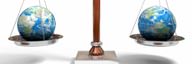 Difference Between Mass and Weight
 Celsius
Comments: Earth vs Venus