

Christianity and Judaism are two Abrahamic religions that have similar origins but have varying beliefs, practices, and teachings.
Comparison chart
| Christianity | Judaism | |
|---|---|---|
 |  | |
| Use of statues and pictures | In Catholic & Orthodox Churches. | Ancient times: Not allowed as it is considered Idolatry. Today, great artwork is encouraged. Statues of people are fine, but not as religious icons. |
| Place of worship | Church, chapel, cathedral, basilica, home bible study, personal dwellings. | Synagogues and temples, home, Western Wall of the Temple in Jerusalem |
| Belief of God | One God: Father, Son, and Holy Spirit. The Trinity. | One God (monotheism), often called HaShem—Hebrew for 'The Name', or Adonai— 'The Lord'. God is the one True Creator. God has always existed, none existed before him and will exist forever. He transcends life and death. |
| Clergy | Priests, bishops, ministers, monks, and nuns. | Ancient times: Hereditary privileged priest class--Kohen and Levi. Present day: Religious functionaries like Rabbis, Cantors, Scribes, Mohels. |
| Founder | The Lord Jesus Christ. | Abraham, Isaac, Jacob, and Moses |
| Literal Meaning | Follower Of Christ. | Grateful person (named for Judah, who was named "gratitude" by his mother, Leah) |
| View of the Buddha | Christians believe that the Buddha was a false teacher, and do not adhere to anything he taught. | N/A. |
| Marriage | A Holy Sacrament. | Ancient times: unlimited polygamy with concubinage. In modern times, monogamy officially since 1310 AD. |
| Followers | Christian (followers of Christ) | Jews, Jewish people |
| Scriptures | The Holy Bible | Tanakh (Jewish Bible), which includes the Torah |
| Original Language(s) | Aramaic, Greek, and Latin. | Hebrew, Aramaic. Over the centuries, Jewish languages have also included Yiddish (among the Ashkenazi Jews of Europe); and Ladino (among the Sephardic Jews of Spain and North Africa). |
| Place of origin | Roman province of Judea. | The Levant |
| Population | Over two billion adherents worldwide. | Around 13-16 Million, debated. Population varies due to conversion (although some types are not recognized by the state of Israel) and "marrying out" (of the faith) |
| Second coming of Jesus | Affirmed. | Denied. (not part of liturgy) |
| Holy Days | Christmas (celebration of the birth of Jesus), Good Friday (death of Jesus), Sunday (day of rest), Easter (resurrection of Jesus), Lent (Catholicism), saints' feast days. | Rosh Hashanah, Yom Kippur, Sukkot, Simchat Torah, Chanukah, Tu B'Shvat, Passover, Lag B'Omer, Shavuot. Shabbat (Sabbath). Sabbath most important—one day a week no work, just peace, joy and prayer. |
| Practices | Prayer, sacraments (some branches), worship in church, reading of the Bible, acts of charity, communion. | Prayers 3 times daily, with a fourth prayer added on Shabbat and holidays. Shacarit prayer in the morning, Mincha in the afternoon, Arvit at night; Musaf is an extra Shabbat service. |
| Life after death | Eternity in Heaven or Hell, in some cases temporal Purgatory. | World to come, Reincarnation (some groups); unifying with God, there are different opinions and beliefs |
| Position of Mary | Mother Of Jesus. Revered in all denominations. Degree of reverence varies from denomination. | Not applicable, as Jews do not believe that Jesus is their Messiah, and therefore, his Jewish mother plays no role in the Jewish religion other than history. |
| Prophets | Prophets in the Bible are venerated. | Moses, and the subsequent Prophets of Israel as told in the Jewish Bible (Tanakh). |
| Belief | The Ante-Nicene Creed sums up Christian belief in the Holy Trinity. | Jewish central belief is that there is only one God, and God has a special relationship, a contract, with them that they can fulfill by performing mitzvot. |
| Means of salvation | Through Christ's Passion, Death, and Resurrection. | This is not a concept held in Judaism. Jews do not strive to achieve a status at the time of death. |
| Human Nature | Man has inherited "original sin" from Adam. Mankind then is inherently evil and is in need of forgiveness of sin. By knowing right and wrong Christians choose their actions. Humans are a fallen, broken race in need of salvation and repair by God. | You must choose good from bad. You are responsible for your actions, not thoughts. |
| Jesus | Son Of God. Second person of the Trinity. God the Son. | Not mentioned in the Jewish texts. No specific beliefs about this individual. |
| Goal of religion | To love God and obey his commandments while creating a relationship with Jesus Christ and spreading the Gospel so that others may also be saved. | To celebrate LIFE! To fulfill the Covenant with God. Do good deeds. Help repair the world. Love God with all your heart. Strong social justice ethic. |
| Position of Abraham | Father of the faithful. | The first patriarch and father of the Jewish religion. His father was an idol-maker but Abraham did not believe in idolatry or polytheism. |
| Geographical distribution and predominance | As the largest religion in the world, Christianity has adherents are all over the world. As a % of local population, Christians are in a majority in Europe, North and South America, and Australia and New Zealand. | Existing in Israel for 1500 years, but the Romans in 70 AD kicked all Jews out. Jews are dispersed all over the world, at one time present in almost every country. Now the majority live in Israel, USA, Canada, Russia, France, England. |
| Status of Vedas | N/A. | N/A. |
| Day of worship | Sunday (most denominations), Saturday (Seventh-Day Adventist, Seventh-Day Baptist) | Friday at sunset through Saturday sunset, is the Sabbath, THE most Holy Day (yes, all 52 of them). Taking time off from work, once a week, was invented by Judaism. It is more Holy than any other holiday, and is spent in contemplation and prayer. |
| Confessing sins | Protestants confess straight to God, Catholic confess mortal sins to a Priest, and venial sins straight to God (Orthodox have similar practice) Anglicans confess to Priests but considered optional. God always forgives sins in Jesus. | Ancient times: there was a sin offering for individuals. Today people individually repair their sins. On Yom Kippur, they confess sins, and ask forgiveness from God. But also they must ask forgiveness directly from any people they may have wronged. |
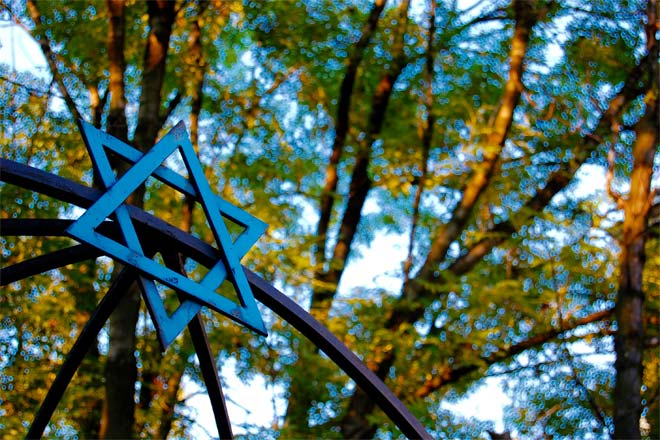
| Symbols | Cross, ichthys ("Jesus fish"), Mary and baby Jesus. | Star of David, Menorah. |
| View of other Dharmic religions | N/A. | N/A. |
| Abrahamic Lineage | Abraham, Isaac, and Jacob. | Abraham, Isaac, and Jacob are thanked every prayer day. Jacob's 12 sons became the 12 tribes of israel. Of these, 10 were lost during Assyrian Exile. |
| Use of Statues | Varies by denomination. Not used in Protestant denominations; icons are used in Catholic & Orthodox denominations. | Forbidden to use in religion |
| Religious Law | Varies among denominations. Has existed among Catholics in the form of canon law. | Halakhah. Ethics. Commandments. 613 mitzvahs to be followed. Charity. Prayer. Rabbinical rulings with minority opinions. Debate very important part of system. Debate is encouraged in schools. Part of Bible addresses specific laws for everyday life. |
| Birth of Jesus | Virgin Birth, through God. | Not mentioned in Jewish texts. |
| About | Christianity broadly consists of individuals who believe in the deity Jesus Christ. Its followers, called Christians, often believe Christ is "the Son" of the Holy Trinity and walked the earth as the incarnate form of God ("the Father"). | Judaism was created by Abraham 2000 BCE and his descendants, Isaac and Jacob. |
| Religion which atheists may still be adherents of | No. | Yes. Judaism is both a faith practice and an ethnicity, so people are born and retain their Jewish identity whether or not they practice the religion. |
| Death of Jesus | Death by crucifixion, resurrection, and ascension to heaven. Will return. | Not mentioned in Jewish texts. |
| Virtue on which religion is based upon | Love and justice. | Justice. |
| Branches | Roman Catholics, independent Catholics, Protestants (Anglicans, Lutherans etc.), Orthodox (Greek orthodox, Russian orthodox). | Religious: Orthodox, Conservative, Reform, Renewel, Reconstruction. Traditions: Sephard, (Spain, Arab countries, Turkey). Ashkenazi: (Europe, Russia). MIzrachi: (Iraq, Persia, India). |
| God's role in salvation | Humans cannot save themselves or ascend on their own to a higher level. Only God is good and therefore only God is able to save a person. Jesus came down from Heaven to save mankind. | Salvation is not a concept in Jewish faith. Each New Year, during Yom Kippur, Jews fast and pray for forgiveness from God, and if accepted, are written into the Book of Life, for the next year. |
| Identity of Jesus | The Son Of God. | Simply not part of liturgy. Not mentioned one way or the other. |
| Promised Holy one. | Second Coming of Christ | Belief in the Coming of a Messiah. |
| On Clothing | Conservative Christians dress modestly; women may wear long skirts or dresses; men may wear dress clothes that do not show the chest, legs, and arms. More moderate or liberal Christians generally reject such clothing restrictions. | Orthodox men always wear hats; Orthodox women either wear hats or wigs. Orthodox dress is modest. |
| Names of God | God, Gud, Gott, Deo, Dios. Jehovah, YHWH, Eli Elohim, (depending on language Christians are of every language and culture around the world) | HaShem, Adonai, |
| Related Religions | Islam, Judaism, Baha'i faith | Christianity, |
| Authority of Pope | Leader and overseer of the Catholic Church. his authority is completely rejected by Protestants, and is viewed by Orthodox as first among equals. Orthodox and Protestants reject Papal infallibility and Papal supremacy. | N/A |
| Status of Muhammad | N/A. | N/A. |
| On Women | Equal to men. In some denominations, they may become nuns. | Equal to men and non-binary people in Reform/Liberal Judaism. |
| Holy days/Official Holidays | The Lord's Day; Advent, Christmas; New Year, Lent, Easter, Pentecost, every day is dedicated to a Saint. | Sabbath, Havdalla, Rosh HaShanah, Yom Kippur, Sukkot, Simchat Torah, Chanukah, Tu BiShvat, Purim, Passover, Lag BaOmer, Shavout. Holocaust remembrance. |
| Goal of Philosophy | Objective reality. Worship of God who created life, the universe, and is eternal. Christianity has its own philosophy, found in the Bible. That philosophy is Salvation from sin, through the Passion of Our Lord Jesus Christ. | To live a proper and Holy Life. To appreciate Life in every way. To do Good Deeds. To live Ethically. To make choice based on Free Will. Universal Education for every Jew; to study, learn. read and write. |
| View of God | One Trinity God, Who Is the Father, the Son, and the Holy Spirit. | God is the one True Creator. God has always existed, none existed before him and will exist forever. He transcends life and death. God is one and the only holiness. God is the creator. He is beyond human understanding, he is omnipotent. |
| Place and Time of origin | Jerusalem, approx. 33 AD. | 1500 BC, Middle East. Religion formed over several centuries; was codified during the Babylonian exile. Literacy is encouraged to read Bible. Jews replaced animal sacrifice with prayer in Diaspora, after Romans destroyed Jerusalem Temple in 70 AD |
| Ressurection of Jesus | Affirmed. | Denied. |
| View of other Abrahamic religions | Judaism is regarded as a True religion but incomplete (without Gospel, and Messiah) Islam is regarded as a false religion, Christianity does not accept the Qur'an as true. | Believe that Christians are wrong in believing that Jesus is the Messiah; they neither believe nor disbelieve that Muhammad and/or Bah-u-llah are prophets. |
| Virtue(s) in which religion is based upon | Love and justice. | Justice; strict adherence to God's law. Reading the Holy Books, and following the Commandments. |
| Offshoot religions | Rastafarianism, Universalism, Deism, Masonry and Mormonism. | Abrahamic religions -- Christianity and Islam. |
| Resurrection of Jesus | Affirmed | Simply not mentioned. not part of liturgy in Judaism. Considered authentic part of Christianity. |
| Rites | Seven sacraments: Baptism, confirmation, Eucharist, penance, anointing of the sick, holy orders, matrimony (Catholic and Orthodox). Anglicans: Baptism and Eucharist. Other denominations: Baptism and communion. | Mitzvahs. Bar & Bat Mitvahs are the most well known, but, there are others too. |
| No. of Gods and Godesses | 1 God | 1 God |
| Promised Holy One | Second Coming Of Christ. | The Messiah. |
| Views on the afterlife | Eternity in Heaven or Hell; some believe in temporal suffering in Purgatory, before admittance into Heaven. | Jews beleive in a human Soul, and Orthodox believe in A World To Come and a form of Reincarnation. Differing beliefs accepted. Very little discussion on afterlife. Focus is on time on Earth now. |
| Praying to Saints, Mary, and Angel | Encouraged in the Catholic & Orthodox Churches; most Protestants only pray directly to God. | Jews only pray to God. They do not need Rabbis to pray. Each Jew can pray directly to God whenever he or she wants to. That said, they do choose to pray at the graves of holy men and some in Judaism. The Tomb of Rachel the Matriarch especially. |
| Use of statues, images | some denominations regard It as forbidden and Idolatry. Anglicans and Lutherans allow pictures but forbid venerating them. Catholics encourage pictures and statues and venerate them. Orthodox encourage pictures and venerate them. | Forbidden |
| Original Language | Aramaic, Greek, and Latin | Hebrew has always been the central language of prayer. From 500 BCE, Aramaic and Greek koine and 'Aramized' Hebrew till 300 CE. Local languages and different extinct and living Jewish languages like Carfati, Yiddish, Ladino, Judesmo. |
| View of other Oriental religions | N/A. | N/A. |
| Primary God(s) | A single, all-powerful god known as God that is typically thought of in "trinity" form: God, the Father; Christ, the Son; and the Holy Spirit (or Ghost). | The God of Abraham, Isaac, and Jacob (Israel). |
| Concept of Deity | 1 God, in 3 Divine Persons: The Father, the Son, and the Holy Spirit. | Belief in one God and teachings of the tradition, prophets and rabbis. |
| Status of Adam | The first man. Humanity is in a state of Original Sin, due to Adam's disobedience to God. | First known use of the Adam/Eve mythology. |
| Original Languages | Aramaic, Common (Koine) Greek, Hebrew. | Hebrew common till 500 BCE, Aramaic and Greek koine till 300 CE. Hebrew always for religious services. Local languages and different extinct and living Jewish languages like Carfati, Yiddish, Ladino, Judesmo etc |
| Revered People | Varies by sect/denomination. Saints, the Pope, cardinals, bishops, nuns, church pastors, or deacons. | The Patriarchs, Moses, various rabbis, and Tzaddics, down through the centuries. |
| On Food/Drink | Jesus said, "'...Whatever goes into a person from outside cannot defile him, since it enters not his heart but his stomach, and is expelled?' (Thus he declared all foods clean.)" Mark 7:19 | Jews are required to eat kosher food. Pork is forbidden. Requirement for prayer and ritual butchery of meat. Quick and swift slaughter at single point on the throat; blood has to be completely drained. |
| Most Common Sects | Catholics, Protestants, Greek Orthodox, Russian Orthodox, Mormons (LDS). | Orthodox, Conservative, Reform, Renewal and Reconstructionist. |
| Important Tenets | The Ten Commandments, The Beatitudes. | The Law of Moses. |
| Spiritual Beings | Angels, demons, spirits. | Angels, demons, and spirits. |
| Sacred Texts | Christian Bible (includes Old and New Testaments). What is considered canon may vary slightly by sect/denomination. | Torah |
| On Race | All races viewed equal in Christianity. However, Bible passages on slavery were used to support the practice in the past in the U.S. The "curse of Ham" was sometimes thought to be Black people; modern interpretations reject this. | Jews believe they are the "chosen people" i.e. descendants of the ancient Israelites are chosen to be in a covenant with God. However, all human beings are God's people, descended from Adam and Eve who were created in the image of God. |
| View of Jesus | God in human form, "Son of God, " savior. Death by crucifixion. Christians believe Jesus rose from the dead, was taken up into heaven, and will return during the Apocalypse. | Regular Jewish person, not a messiah. |
| View on Abrahamic religions | All worship the One God. | Jews began Abrahamic religions. Christians share early prophets.The Koran also has renditions of these prophets. The New Testament can be viewed as written by Jews for the Jews of that time. |
| Founders and Early Leaders | Jesus, Peter, Paul, and the Apostles. | Abraham, Moses, David, and many Prophets. |
| Views on other religions | Christianity is the only True Faith. | All people should obey 7 (Noahide) Commandments, a set of very basic moral laws. Non-Jews should follow their religion, and let Jewish people follow Judaism. |
| On Money | Tithing / charitable giving. "Again I tell you, it is easier for a camel to go through the eye of a needle than for someone who is rich to enter the kingdom of God." —Jesus in Matthew 19:24 | Tzadaka |
| On LGBT | Varies. Christians who believe in more literal interpretations of the Bible rarely accept homosexuality; some see it as a crime. "Do not be deceived...men who have sex with men...will not inherit the kingdom of God." —1 Corinthians 6:9-10 | Generally accepted and celebrated in Reform/Liberal branches. |
| imams identified as | N/A. | N/A. |
| On Marriage/Divorce | Definition of marriage and divorce acceptance varies by sect/denomination. Bible includes examples of polygamy and monogamy and only condones divorce in cases of adultery. | Orthodoxy only recognizes opposite-sex marriages. Only men can serve women the divorce document, known as a "get." In Reform Judaism, there's no need for the get. Civil marriages/divorces are recognized and same-sex couples can marry. |
| View of Animistic religions | Paganism is Heathenism. Witchcraft is communication and interaction with demons, fallen evil angelic beings. These have no real interest ultimately, in helping their worshipers. Demonic possession is common. | The earliest Jewish holidays correspond to agricultural seasons. Jews uniquely developed monotheism as a God of All. They were surrounded by pagen tribes who believed in gods based on their location, or nature. |
| On Atheism | Atheists will go to hell because they do not believe in God, while some think that there will be a chance for repentance at the end. | Some Jews are atheists. |
| Concept of God | One God, Who Is the Father, the Son, and the Holy Spirit. | One God |
| Prophet | Moses, Samuel, Nathan, Elijah, Elisha, etc., as well as both Johns in the New Testament too. | Moses, Samuel, Nathan, Elijah, Elisha, etc. |
| Belief of deities | One God three forms: The Father, the Son, and the Holy Spirit. | One God. |
| Legislation | Varies through denomination. | Prerogative of the people |
| sects | Catholic, Protestant, and Orthodox. | Orthodox, Conservative, Reform, Sephardim, Karaite, Samaritan, and so on. |
| Direction of Prayer | Catholics and Orthodox usually face the Tabernacle in their prayers but it is not considered necessary, but recommended. God is present everywhere recent reforms have prompted many Christians to not face anywhere in their prayers. | Toward Jerusalem. |
| Praying to Saints,Mary, and Angel | Affirmed, in Catholic, Orthodox, Lutheran, & Anglican(Episcopalian)Christianity; most Protestants do not. | N/A. |
| Purgatory | Believed in by various denominations. It is debated in Christianity. | Believed in Judaism. |
| Marriage and Divorce | Explained by Jesus in Mathew 19:3-9 and said, ‘Therefore a man shall leave his father and his mother and hold fast to his wife, and the two shall become one flesh. Therefore what God has put together let man not seperate.' | Monogamous. Marriage permitted. |
| Saints | Catholics and Orthodox venerate very Holy people as Saints. Most Protestants do not do this, however they do look at them as inspirational figures. | Jewish holy figures are known as Tzaddics. |
| Virtues in which religion is based upon | Love, charity, and mercy. | Justice, faithfulness, charity, modesty, Tikkun Olam (improving the world), mitzvot (good deeds, following God's law), Love of the creations. Ethics. Social Justice. Intellectual discussions, and study. |
| Status of Elohim | God | God |
| Views about other religions | No other religion leads to God. Judaism being a unique exception, Jews viewed as ignorant of the Messiah. | The m |
| Three Jewels/Trinity | The Blessed Trinity: In the name of the Father the Son and the Holy Spirit | God, people, and Israel |
| What is it? | Christianity is the religion founded by Christ, to which He is central to. | Judaism is the Abrahamic religion of the Jewish people, based on principles and ethics embodied in the Hebrew Bible (Tanakh) and the Talmud (the great written opinions of the different rabbi's and intellectuals and holy men throughout the years) |
| War between two churches/ major sects | Catholics & Protestants used to be at war in Northern Ireland; In USA, many fundamentalist Protestants vehemently deny Catholics are Christian. | Different sects agree and differ with each other. There is room for debate with no violence. Orthodox and Reform Jews greatly dislike one another. |
| Days of worship | Sunday. | Sabbath, sundown Friday to sundown Saturday. (Days start at sundown.) |
| Significance of Eucharist | It Is Christ Himself. | N/A. |
| Presence of Christ in Eucharist | Literally Present in Catholicism and in Orthodoxy. | N/A. |
| Holy day(s) | Sunday, Christmas, Easter, Pentecost, All Saints' Day, various Saints' Days throughout the year. | Rosh Hashanah, Yom Kippur, Sukkot, Simchat Torah, Chanukah, Tu B'Shvat, Passover, Lag B'Omer, Shavuot, Shabbat (Sabbath). |
| Clothes | While there is no specific form of religious dress, people are encouraged to dress conservatively, rather than provocatively. | Jews wear skullcaps called kippot, or yarmulkes. In prayer, Men over 13 wear shawls, called Tallit, and during morning prayer, leather straps called Tefillin, which awaken the spiritual connection with God. Women cover their heads with a prayer shawl |

About Judaism and Christianity
The definition of Christianity varies among different Christian groups. Roman Catholics, Protestants and Eastern Orthodox define a Christian as one who is the member of the Church and the one who enters through the sacrament of baptism. Infants and adults who are baptized are considered as Christians. Jesus's Jewish group became labeled 'Christian' because his followers claimed he was 'Christ' the Greek equivalent of the Hebrew and Aramaic word for 'Messiah.' Judaism is the religion of the Jewish people, based on principles and ethics embodied in the Hebrew Bible (Tanakh) and the Talmud.
Christianity began in 1st century AD Jerusalem as a Jewish sect and spread throughout the Roman Empire and beyond to countries such as Ethiopia, Armenia, Georgia, Assyria, Iran, India, and China. The first known usage of the term Christians can be found in the New Testament of the Bible. The term was thus first used to denote those known or perceived to be disciples of Jesus. The history of early Christian groups is told in Acts in the New Testament. The early days of Christianity witnessed the desert Fathers in Egypt, sects of hermits and Gnostic ascetics.
Jesus gave the New Law by summing up the Ten Commandments. Many of the Jews did not accept Jesus. For traditional Jews, the commandments and Jewish law are still binding. For Christians, Jesus replaced Jewish law. As Jesus began teaching the twelve Apostles some Jews began to follow Him and others did not. Those who believed the teachings of Jesus became known as Christians and those who didn't remained Jews.
Differences in Beliefs
The Religion of Mary and Joseph was the Jewish religion. Judaism's central belief is the people of all religions are children of God, and therefore equal before God. Judaism accepts the worth of all people regardless of religion, it allows people who are not Jewish and wish to voluntarily join the Jewish people. While the Jews believe in the unity of God, Christians believe in the Trinity. A Jew believes in divine revelation through the prophets and Christians believe it to be through Jesus and the prophets.
The Christian Religion encompasses all churches as well as believers without churches, as many modern practitioners may be believers in Christ but not active church goers. A Christian will study the Bible, attend church, seek ways to introduce the teachings of Jesus into his or her life, and engage in prayer. A Christian seeks forgiveness for his or her personal sins through faith in Jesus Christ. The goal of the Christian is both the manifestation of the Kingdom of God on Earth and the attainment of Heaven in the after-life.
In the following video, Christian apologist Lee Strobel interviews Rabbi Tovia Singer and fellow evangelical Christian apologist William Lane Craig about the Trinity of God:
Scriptures of Christianity and Judaism
Judaism has considered belief in the divine revelation and acceptance of the Written and Oral Torah as its fundamental core belief. The Jewish Bible is called Tanakh which is the dictating religious dogma. Christianity regards the Holy Bible, a collection of canonical books in two parts (the Old Testament and the New Testament) as authoritative: written by human authors under the inspiration of the Holy Spirit, and therefore the inerrant Word of God.
Jewish vs. Christian Practices
Traditionally, Jews recite prayers three times daily, with a fourth prayer added on Shabbat and holidays. Most of the prayers in a traditional Jewish service can be said in solitary prayer, although communal prayer is preferred. Jews also have certain religious clothing which a traditional Jew wears.Christians believe that all people should strive to follow Christ's commands and example in their everyday actions. For many, this includes obedience to the Ten Commandments. Other Christian practices include acts of piety such as prayer and Bible reading. Christians assemble for communal worship on Sunday, the day of the resurrection, though other liturgical practices often occur outside this setting. Scripture readings are drawn from the Old and New Testaments, but especially the Gospels.


Comparing Jewish and Christian Religious Teachings/Principles
Judaism teaches Jews to believe in one God and direct all prayers towards Him alone while Christians are taught about the Trinity of God- The Father, the Son and Holy Spirit. Jews generally consider actions and behavior to be of primary importance; beliefs come out of actions. This conflicts with conservative Christians for whom belief is of primary importance and actions tend to be derivative from beliefs.
Another universal teaching of Christianity is following the concept of family values, helping the powerless and promoting peace which Jews also believe in.
The View of Jesus in Christianity and Judaism
To Jews, Jesus was a wonderful teacher and storyteller. He was just a human, not the son of God. Jews do not think of Jesus as a prophet. Also, Jews believe that Jesus cannot save souls, and only God can. In the Jewish view, Jesus did not rise from the dead. Judaism in general does not recognize Jesus as the Messiah.
Christians believe in Jesus as a messiah and as the giver of salvation. Christians believe that all people should strive to follow Christ's commands and example in their everyday actions.
Geographical Distribution of Jews vs. Christians
The Jews have suffered a long history of persecution in many different lands, and their population and distribution per region has fluctuated throughout the centuries. Today, most authorities place the number of Jews between 12 and 14 million. Predominantly, Jews today live in Israel, Europe and the United States.
Data suggest that there are around 2.1 billion Christians in the world all around the globe inlcuding South and North America, Europe, Asia, Africa, and Oceania.
Groups/Sects
Jews include three groups: people who practice Judaism and have a Jewish ethnic background (sometimes including those who do not have strictly matrilineal descent), people without Jewish parents who have converted to Judaism; and those Jews who, while not practicing Judaism as a religion, still identify themselves as Jewish by virtue of their family's Jewish descent and their own cultural and historical identification with the Jewish people.
There are many people who follow christianity and have divided themselves into various groups/ sects depending upon varying beliefs. The types of Christians include Catholic, Protestant, Anglican, Lutheran, Presbyterian, Baptist, Episcopalian, Greek Orthodox, Russian Orthodox, Coptic.
References
- Jews and Christians: Exploring the past, present and Future by Various Contributors and edited by James H. Charlesworth
- Wikipedia: Jewish history
- Wikipedia: Jew#Who is a Jew
- Wikipedia: Christian
- Wikipedia: Christianity
 New Testament
  Catholicism
  Catholic
  Mormonism
  Christianity
  Sunni
Sunni
Comments: Christianity vs Judaism
Anonymous comments (5)